Fort Worth moves forward with railroad overpass projects aimed at reducing blocked crossings across the city
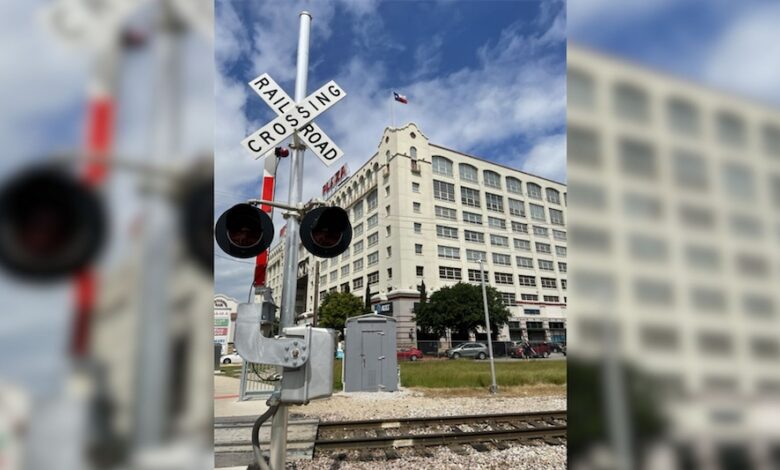
Fort Worth, Texas – The City of Fort Worth is taking steps to improve safety and traffic flow at railroad crossings, where blocked tracks affect thousands of drivers every day. City officials say the new strategy is designed to reduce delays, improve emergency response, and make transportation more reliable for residents, businesses, and visitors.
The proposed improvements were recently presented by the City’s Transportation & Public Works (TPW) team as part of the Master Transportation Plan. The recommendations identify priority locations for future railroad grade separation projects, which would separate roads from railroad tracks by building bridges or overpasses.
Officials say the effort is necessary because Fort Worth has one of the region’s busiest rail systems, with trains frequently disrupting traffic across the city.
Thousands of drivers affected every day
According to the city, more than 102,000 vehicles are impacted daily by blocked railroad crossings.
Fort Worth currently has more than 200 public at-grade railroad crossings, where roadways and train tracks intersect at the same level.
Together, those crossings create more than 5,100 vehicle-hours of delay every day, with many trains reportedly blocking roadways for 30 minutes to an hour or even longer.
City leaders said the consequences extend far beyond longer commutes.
Blocked crossings can slow emergency responders, create safety concerns, reduce mobility, and make it more difficult for neighborhoods to remain connected.
Crash data further highlights the importance of improving these crossings. Between 2021 and 2025, Fort Worth recorded 190 rail-related crashes, resulting in six deaths and 60 injuries.
Grade separation projects identified
To address these concerns, the city is evaluating 26 potential railroad grade separation projects in partnership with railroad companies and transportation agencies.
Officials explained that these projects are selected through a detailed review process that considers factors including safety, traffic flow, community input, project readiness, construction costs, available technology, and overall feasibility.
Grade separation projects eliminate direct conflicts between vehicles and trains by allowing roads to pass over or under railroad tracks.
City officials say these improvements can reduce traffic congestion, improve freight movement, strengthen regional transportation, and increase roadway safety.
One of the projects receiving significant attention is the N.E. 23rd Street/Decatur Avenue Grade Separation Project.
Under the proposal, N.E. 23rd Street, Decatur Avenue, and Samuels Avenue would be elevated over multiple railroad lines used by Union Pacific Railroad, BNSF Railway, TEXRail, Amtrak, and the Fort Worth & Western Railroad.
If completed, the project would remove seven existing at-grade railroad crossings, significantly reducing the number of locations where vehicles must wait for passing trains.
The proposal has received support from the City of Fort Worth, Tarrant County, Trinity Metro, and several railroad partners.
The city has also pursued outside funding to help pay for the project. Officials noted that the proposal was not selected for the Federal Railroad Administration’s Fiscal Year 2023-24 Railroad Crossing Elimination Grant, while decisions on funding applications submitted through the Texas Department of Transportation Off-System Rail Grade Separation State Fund Program and the Federal-State Partnership Program are still pending.
Technology will complement infrastructure improvements
Because large construction projects often require years of planning and significant financial investment, Fort Worth is also exploring technology that could improve conditions much sooner.
The Transportation & Public Works Department is working on plans to install train detection sensors, roadside warning signs, and an integrated information system capable of providing real-time train delay information.
Officials said the technology could notify drivers about blocked crossings while also giving roadway agencies and emergency responders up-to-date information that helps them choose faster alternate routes.
Potential sensor locations were selected through a screening process conducted by the Texas A&M Transportation Institute in partnership with city staff.
The evaluation considered several factors, including train traffic, roadway traffic, nearby schools and neighborhoods, emergency service access, delay times, and crash history.
City leaders believe combining long-term infrastructure investments with modern technology will create a transportation network that is safer, more efficient, and better prepared for future growth.
As Fort Worth continues coordinating with railroad companies, transportation partners, and funding agencies, officials say the goal remains clear: reducing delays, improving public safety, supporting emergency response, and creating stronger connections throughout the city and the greater North Texas region.