
Texas gains symbolic business victory with 57 Fortune 500 headquarters
Texas – California’s long hold on one of the country’s most watched business bragging rights has slipped, and Texas is now standing in front by the thinnest of margins, News Sickle Arrow reported.
According to the Sacramento-based news outlet, the 2026 Fortune 500 list shows Texas with 57 corporate headquarters, just ahead of California’s 56. The shift is small on paper, but large in meaning. Two years ago, California still held the top spot. Now, the balance has moved east, giving Texas a new claim as the leading state for America’s biggest companies. The revenue numbers add more weight to the change: Texas-based Fortune 500 corporations generated about $2.8 trillion, while California companies reported about $2.7 trillion.
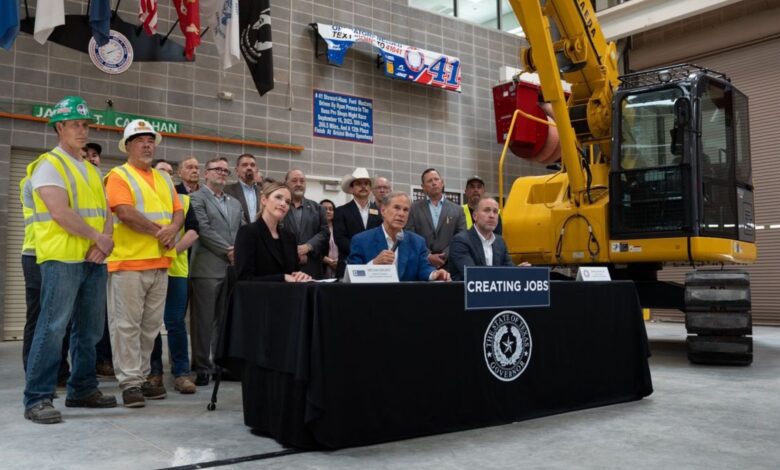
For Texas leaders, the new ranking became an immediate victory lap. Gov. Greg Abbott said the result showed companies were responding to the state’s business environment.
“Texas is the undisputed headquarters of headquarters,” Abbott said, adding that major firms choose Texas because of its “welcoming business climate, predictable regulatory environment, and skilled and growing workforce.”
The shift did not happen overnight. Texas has spent years pulling in companies with lower taxes, fewer regulations and a fast-growing workforce. Fortune noted that the state has attracted major names such as Tesla, McKesson and Oracle in recent years, while long-established Texas giants such as Exxon, Dell Technologies and AT&T remain part of the state’s corporate backbone. Houston alone is home to 25 Fortune companies, including Chevron, Sysco and Phillips 66.
The latest movement has been especially painful for California because several high-profile companies and business figures have looked toward Texas at the same time. In the past year, companies including ExxonMobil, Chevron, Samsung Electronics America, SpaceX and X have moved either their headquarters or legal incorporation to Texas, with most coming from California and two from New Jersey.
California still remains an economic giant. Its top Fortune 500 names include Apple, Alphabet and Nvidia, and the state continues to carry enormous strength in technology, venture capital, entertainment, research and global trade. But the Fortune 500 count has become a symbol of something broader: a competition over where the next generation of corporate power wants to sit.
That question is growing louder as California faces a fight over the proposed California Billionaire Tax Act. SEIU-UHW said it submitted 1.55 million voter signatures on April 27, nearly double the 875,000 needed, to move the measure toward the November 2026 ballot. The union says the proposal is meant to help protect health care, public K-14 education and food assistance programs.
The measure would create a one-time 5% tax on the net worth of California billionaires. According to the Legislative Analyst’s Office, billionaires who lived in California on Jan. 1, 2026, would owe the tax in 2027, with the option to spread payments over five years at an added cost. Real estate, pensions and retirement accounts would be excluded
Supporters frame the tax as an emergency answer to funding pressure. SEIU-UHW says federal health care cuts could strip roughly $100 billion from California health care over five years and argues that about 200 Californians with more than $1 billion in wealth should help fill the gap.
Opponents see a different danger. A report cited by tax critics warned the proposal could lead to more than 108,000 job losses, $28 billion in annual wage losses and major tax revenue declines by 2046. The Legislative Analyst’s Office also said the state could see a temporary revenue boost from the tax, but warned that if some billionaires leave California, ongoing income tax revenue could fall by hundreds of millions of dollars or more each year.
That is the hard edge of California’s moment. Texas has taken the Fortune 500 crown by one headquarters. California is still rich, deep and powerful. But as companies and billionaires weigh taxes, rules and long-term certainty, the state is now fighting not just for revenue, but for confidence.